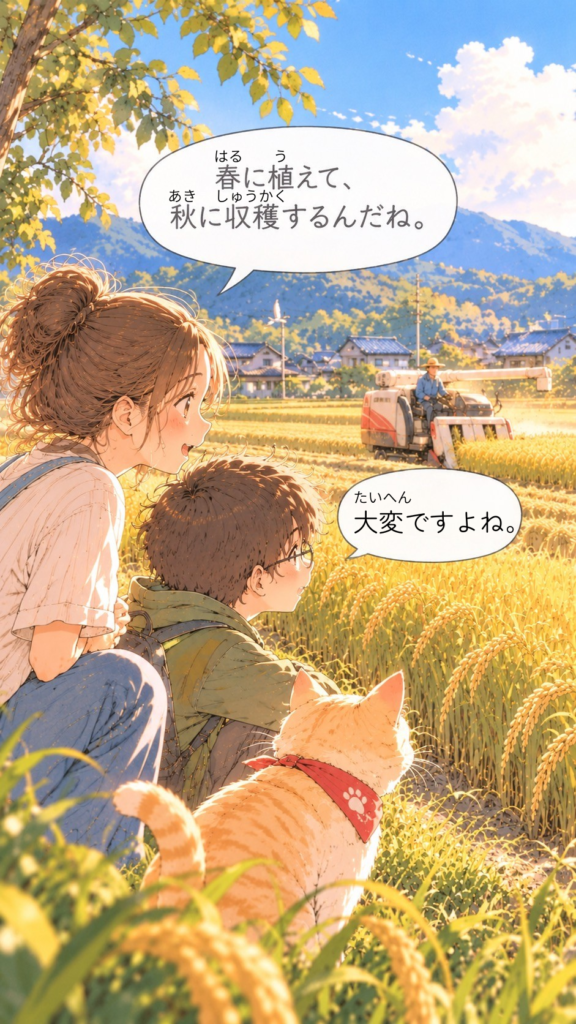
①春に植えて (haru ni ue-te)
plant (rice) in spring and
・春に in spring
・植えて 動詞「植える」のて形 the te-form of 植える
「て形」 connects actions.
In this sentence, it shows the order of two actions.
春に植えて、(そして)秋に収穫する。
②秋に収穫するんだね (aki ni shuukaku suru n da ne)
So, they harvest it in autumn.
・秋に in autumn
・収穫 harvest (noun)
・収穫する to harvest (verb)
・カジュアル:「〜んだ」 動詞+んだ(のだ)
ていねい:「〜んです」(〜のですの省略形)
Verb + んだ (のだ)
The casual form of んです (short for のです).
・ね 助詞 particle
文の最後におき、自分の気持ちや考えを相手と共有するときに使う。
“Ne” is put at the end of a sentence. It is used when we want agreement with some assertion.
③大変ですよね (taihen desu yo ne)
That’s hard work, isn’t it?
・大変 hard/difficult ナ形容詞 na-adjective
・です 「だ」のていねいな言い方
・よね 助詞「よ」+助詞「ね」 確認したり同意を求めるときに使います。
Used to share your thought and seek agreement from the listener.
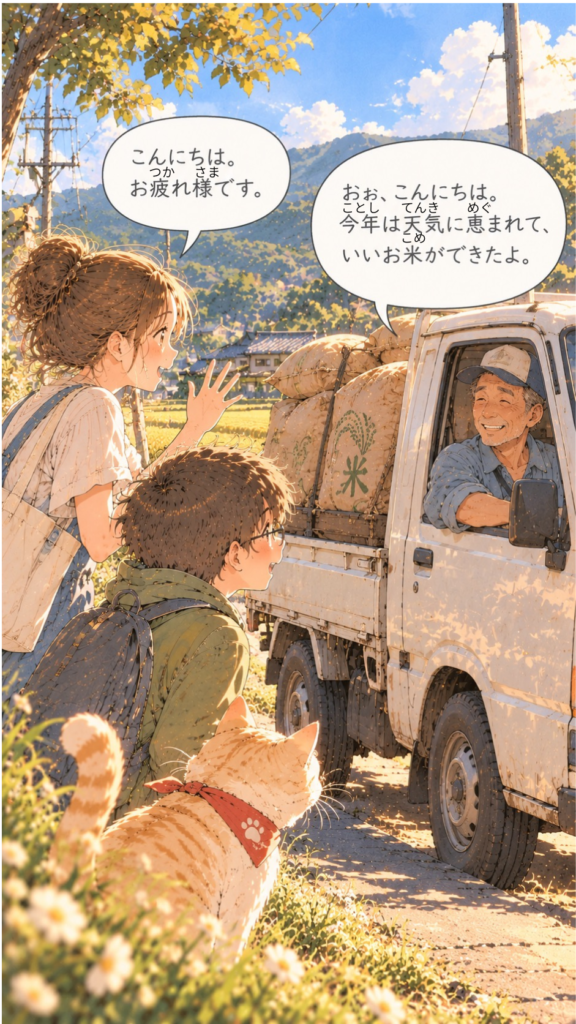
①こんにちは (konnichiwa) Hello.
②お疲れ様です(otsukaresama desu)
仕事をしている人や、仕事が終わった人にかける言葉です。相手の行動に対して、感謝したり、疲れを気にかけたりする気持ちを表します。職場では、あいさつとしてもよく使います。
We say ‘otsukaresama desu’ to someone who is doing something or has finished an activity. It shows that we notice their effort and care about them. It is also often used as a greeting at work.
③今年は天気に恵まれて(kotoshi wa tenki ni megumare-te)
・今年 (kotoshi) this year
・は (wa) particle
・天気 (tenki) weather
・〜に恵まれて 「恵まれる」のて形 the te-form of 恵まれる
〜に恵まれる to be blessed with something
よいものや、役に立つものを得ること。
例)
・天気に恵まれる
・友人に恵まれる
・人材に恵まれる
④いいお米ができたよ (ii okome ga dekita yo)
We got good rice this year.
・いい 良い。いい+名詞
・お米(kome) rice
・できた 「できる」の過去形。この会話では「できあがった」という意味。
・よ 文末の助詞。この会話では、相手が知らないかもしれない情報を伝えている。
In this conversation, よ is used to tell the listener something they may not know.
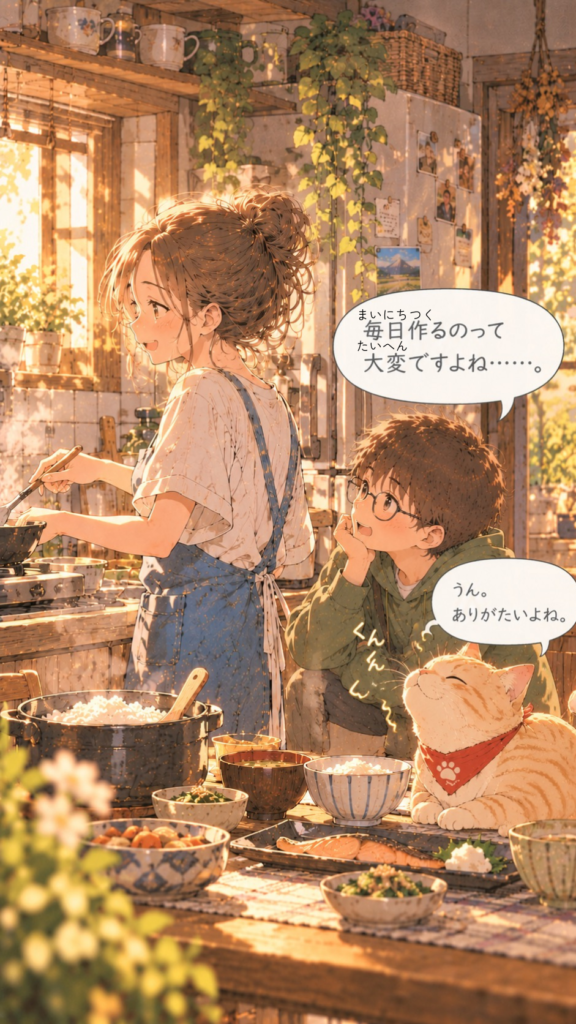
①毎日作るのって (mainichi tsukuru no tte)
・毎日(mainichi) every day
・作るの 動詞「作る」+「の」 名詞化 作ること
Turns a verb into a noun phrase.
tsukuru — to make
tsukuru no — making (something)
・〜のって 「〜のは」のカジュアルな形
作るのは大変ですよね。
作るのって大変ですよね。
A casual form of のは in this sentence.
②大変ですよね (taihen desu yo ne)
That’s hard work, isn’t it?
・大変 hard/difficult ナ形容詞 na-adjective
・です 「だ」のていねいな言い方
・よね 助詞「よ」+助詞「ね」 確認したり同意を求めるときに使います。
Used to share your thought and seek agreement from the listener.
③うん Yes
④ありがたいよね (arigatai yo ne)
・ありがたい(有り難い)
「有り難い」は、もともと「あることが難しい」、つまり「めったにない」という意味です。
今は、何かをうれしく思い、感謝する気持ちをあらわすときに使います。
Arigatai means “to be grateful” or “to feel thankful for something.”
The word originally meant “rare” or “uncommon.”
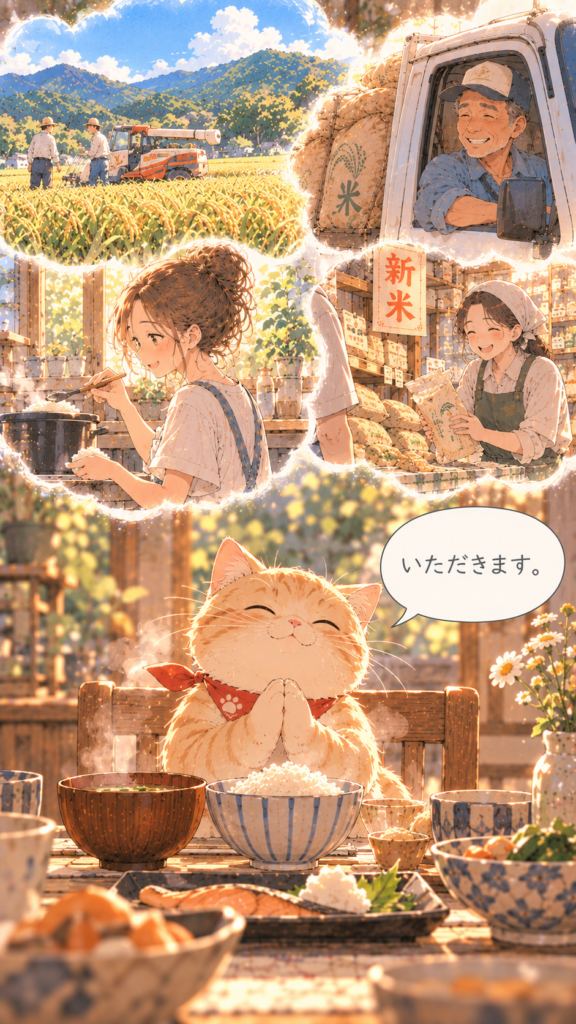
「いただきます」と言うと、料理を作った人から「召し上がれ」と言われるかもしれません。そして、食事が終わったら「ごちそうさまでした」と言います。
①めしあがれ(meshiagare)
「どうぞ食べてください」という意味です。食事を作った人や、食べ物をすすめる人が使います。
“Please enjoy your meal.”
We say this when offering food to someone.
②ごちそうさまでした (gochisoosama dish ta)
食事が終わったときに言う言葉です。
食事を作ってくれた人などへの感謝の気持ちを表します。
We say “gochisoosama deshita” after a meal.
It expresses gratitude to the people who prepared the food.
※レストランを出るときにも、「ごちそうさまでした」と声をかけると、お店の人に喜ばれますよ。
When leaving a restaurant, saying “Gochisoosama deshita” to the staff will make them happy, too.
食べ物が食卓に来るまでには、たくさんの人や自然の力が関わっています。
育てる人、収穫する人、運ぶ人、お店で売る人、そして料理を作る人。
食事の前に言う「いただきます」。
この言葉には、食べ物をいただくことへの感謝が込められています。自然の恵みや食べ物の命、そして食事に関わる人たちに思いを向ける言葉でもあります。
Many people and the natural world help bring food to our tables.
People grow food, harvest it, transport it, sell it in shops, and cook it.
Before a meal, we say “Itadakimasu.”
This word expresses our gratitude for the food we receive. It also reminds us of the gifts of nature, the lives that become our food, and the people who help bring food to our tables.