では、4コマ漫画の解説をはじめましょう。
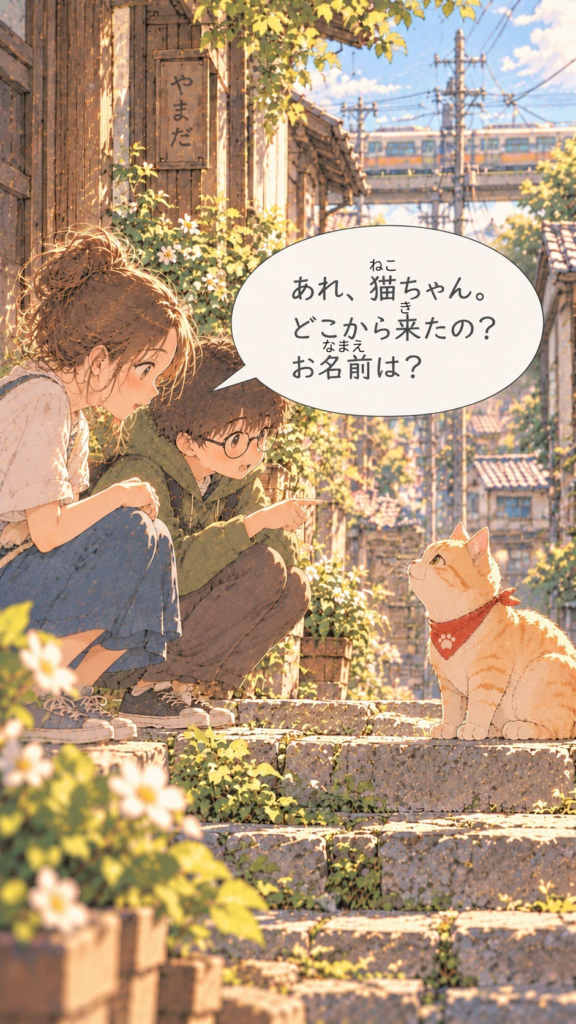
①あれ?(are?)
なにかに気づいたときに使う表現。「あれ、こんなところに!」というニュアンスです。
An expression used when you notice something. Here, it’s like saying, “Oh, there’s a kitty!”
②どこから = From where
どこ = where
から = from
「から」は、場所や時間の始まりをあらわします。
- どこから来ましたか?(dokokara kimashita ka?)
Where did you come from? - どこから聞こえる?(dokokara kikoeru?)
Where is (that sound) coming from? - どこから来た手紙ですか?(dokokara kita tęgami desu ka?)
Where did this letter come from?
③来る(kuru)come → 来た(Kita)came
人や物が、こちらに向かって移動することをあらわします。
It describes a person or thing moving toward the speaker or a place they are referring to.
- 友達が家に来る。(tomodachi ga uchi ni kuru)
My friend comes to my house. - 鳥が飛んで来た。(tori ga tonde kita)
A bird flew over here. - 日本から来ました。(nihon kara kimashita)
I came from Japan.
④カジュアル:どこから来たの? (dokokara kita no?)
ていねい: どこから来ましたか? (dokokara kimashita ka?)
Where did you come from?
④お名前は?(onamae-wa?)
What’s your name?
「名前」に「お」を付けることで、ていねいで柔らかく聞こえます。「なんですか」を省略した表現。
The polite and gentle way to ask someone’s name. Literally, it’s closer to “And your name?” because the question omits words that are understood from context.
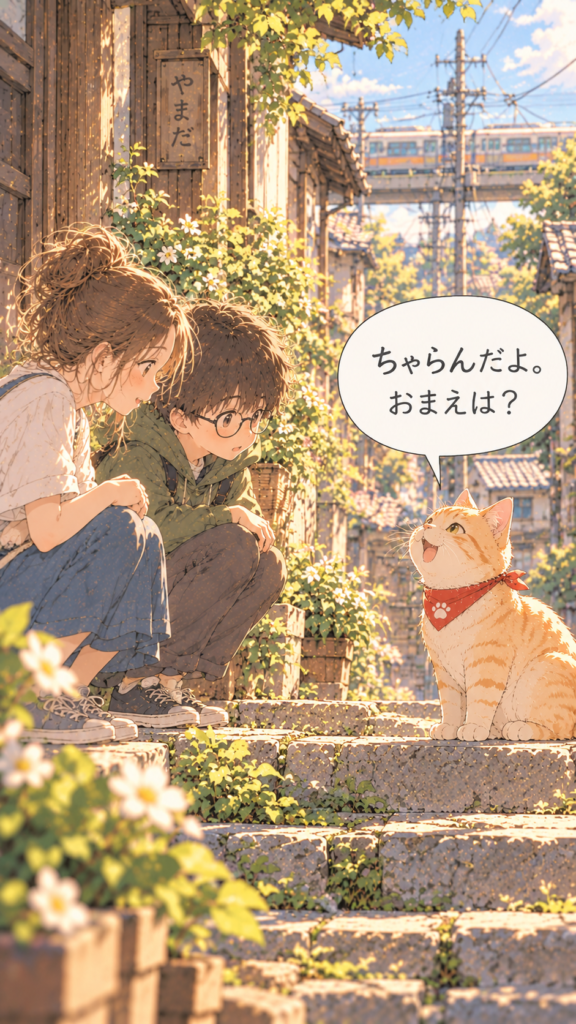
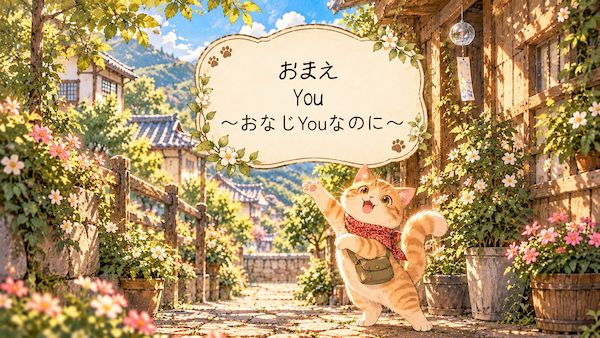
Youのよび方、いろいろ!
日本語では、相手や場面によってよび方が変わります。いろいろな「you」を見てみましょう!
1. 友達モード 😊 Friend Mode
名前・ニックネーム・〇〇ちゃん など
友達には、名前やニックネームでよびかけます。
例)ちゃらんちゃん、ちゃらん、ちゃらんこ
「ちゃん」は、子どもや親しい人などに使います。親しさやかわいらしさを表すことがあります。
(-chan is often used for children and people you feel close to. )
2. 知り合いモード 🙂 Acquaintance Mode
〇〇さん
相手の名前に「さん」をつけると、ていねいな呼び方になります。
知り合いや会社の人など、いろいろな人に使うことができます。
例:田中さん、ちゃらんさん
(-san is a common, polite way to address someone.)
3. ケンカモード??! 😠 Fighting Mode
おまえ・てめえ・われ など
相手を強く呼ぶときに使う言葉です。
- おまえ:乱暴に聞こえることがあります。でも、親しい友達同士で使うこともあります。
“Omae” is sometimes used between close friends, too. - てめえ:とても乱暴で、相手を怒らせるような言い方です。
- われ:これも、かなりケンカモードです。
(These words can sound rough or aggressive. The impression depends on the relationship between the speakers, the situation, and the tone of voice.)
4. 先生・会社モード 🎓 Teacher & Workplace Mode
〇〇先生・〇〇様 など
- 先生:学校の先生や医者などを呼ぶときに使います。
- 〇〇先生:先生の名前につけて使います。
例: 田中先生、ちゃらん先生 - 〇〇様:「さん」よりもていねいな呼び方です。
仕事でお客様の名前をよぶ時など。
(In Japanese, people are often addressed by their title or position. “-sama” is a more formal and respectful form than -san.)
5. 時代劇モード ⚔️. Period Drama Mode
おぬし・そのほう など
あまり使うことはないかと思いますが、冗談などで聞くことはあるかも。
(These are old-fashioned forms of address, often heard in period dramas. People may also use them jokingly in everyday conversation.)
そして、日本語では「あなた」にあたる言葉を言わないことも多いです。
In Japanese, people often leave out the word for “you” because it’s clear from the context who they’re talking to.
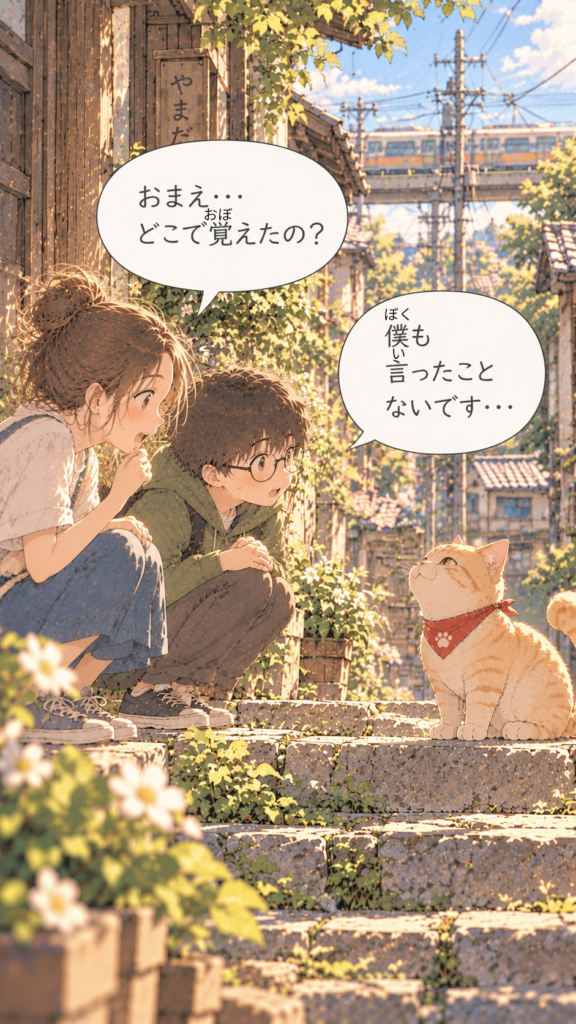
①どこで覚えたの?
どこで = where (at what place)
「で」は、動作がおこなわれる場所をあらわします。
例:
- どこで食べたの? (Where did you eat?)
- どこで買ったの? (Where did you buy it?)
覚える (oboeru) to learn / to memorize
覚えた (oboeta) the past form
「覚える」は、新しいことを知ったり、学んだりして、頭に入れることです。
カジュアル: 覚えたの?
ていねい: 覚えましたか?
②言ったことがない (itta koto ga nai)
to have never said it
- 言う (iu) to say 言った (itta) the past form
- ことがない expresses that you have never had that experience.
- 会話では、「が」を省略して「言ったことない」と言うこともよくあります。
「が」 can often be omitted in conversation.
僕も〜ない = me neither / I haven’t either
ぼくも(おまえって)言ったことないです。
この文では、「おまえって」という言葉が省略されています。
In this sentence, 「おまえって」 is left out.
日本語では、前の会話で何について話しているかわかると、言葉をよく省略します。
In Japanese, people often leave out words when the meaning is clear from the conversation.
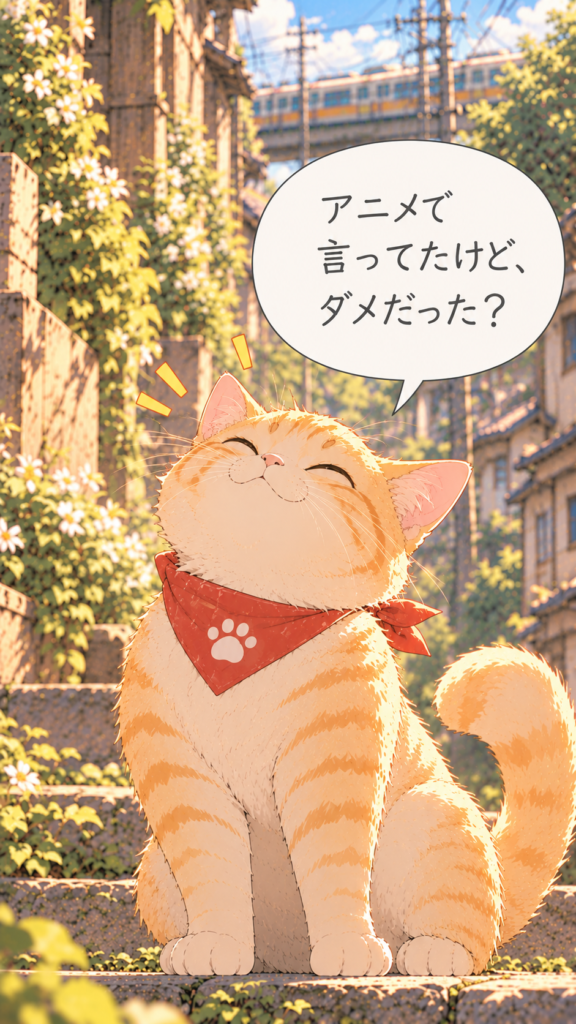
①アニメで言ってたけど、だめだった?
(省略されている言葉)the omitted words
アニメで(誰かが「おまえ」って)言ってたけど、(それは)ダメだった?
In the anime, (someone) said (omae), but was (that) not okay?
アニメで — in the anime
言ってた— 「言っていた」のカジュアル形
けど — but / though
だめだった?— Was it no good?
実はこれ、本当にあった話です。
アニメで日本語を学んだ女の子が、こう聞いてきました。
「私はルーシー(仮名)、おまえは?」
びっくりして、思わず目が丸くなりました。でも同時に、なんだかカワイイなぁ、とも思いました。
本人にまったく悪気はなく、アニメで覚えた言葉を使ってみただけ。
こんなふうに、悪気のない言葉の使い間違いが、思いがけず会話が弾むきっかけになることもあります。
だから失敗を恐れずに使ってみてくださいね。
ただし、「おまえ」は使い方によっては相手を怒らせてしまう言葉でもあります。
わざと使うとケンカになりかねないので、ご注意を。
This is a true story.
A girl who learned Japanese from anime once asked me:
“I’m Lucy (not her real name). Omae wa?”
I was surprised that my eyes went wide! But at the same time, I thought it was kind of cute.
She didn’t mean anything bad. She was just trying to use a word she had learned from anime.
Sometimes, using a word the wrong way, without meaning any harm, can lead to an unexpected and heartwarming conversation. It can even help people feel more comfortable talking to each other. So don’t be afraid of making mistakes. Give it a try!
But be careful: depending on how you use it, “omae” can make someone angry.
If you use it on purpose, it could even start a fight.